- Quick Answer
- Why Limits Beat Willpower
- How to Set Betting Limits: Deposit Limits First
- Loss Limits and Stake Limits
- Time Limits and Reality Checks
- Self-Exclusion and Time-Outs: The Stronger Tools
- Warning Signs: When Limits Are Not Enough
- Getting Help in Nigeria
- Bottom Line
- Frequently Asked Questions
- What is the first betting limit I should set?
- How much should my deposit limit be?
- What is the difference between a time-out and self-exclusion?
- Can I raise my betting limit straight away?
- Is there a gambling helpline in Nigeria?
- Does Nigeria have a national self-exclusion register?
Learning how to set betting limits is the most useful responsible-gambling skill there is: limits decide in advance what a bad day can cost you. In fact, a limit set on a calm morning beats any promise made after a loss.
Last updated: November 2026
Quick Answer
- Firstly, how to set betting limits well starts with a deposit limit before your first deposit. It caps what you can pay in per day, week or month.
- Secondly, add a loss limit and a session time limit, so one bad run cannot empty your account or your evening.
- Thirdly, use reality checks: short pop-ups that show how long you have played and what you have won or lost.
- Next, know the difference between a time-out, a short break, and self-exclusion, a long block.
- Finally, if gambling stops feeling fun, help exists in Nigeria: Gamble Alert 0916 295 7989 and MANI 0809 111 6264.
Why Limits Beat Willpower
Willpower fails at the worst moment: right after a loss, when the urge to win the money back is strongest. That urge has a name: chasing losses, the most common way bankrolls collapse. A limit works because it is a decision made earlier, by a calmer version of you. The site enforces it, not your mood.
Think of it this way. A deposit limit is a fence around your money. A time limit is a fence around your evening. A loss limit is a fence around a bad run. In contrast, playing without limits is playing with no fences at all. For that reason, set your limits when you are calm, before you deposit. Moreover, limits cost nothing and take two minutes to set.
How to Set Betting Limits: Deposit Limits First
A deposit limit caps the total you can pay into one account over a set period: a day, a week or a month. First, it is the simplest tool and the one to set first. If you set only one limit, set this one. That is how to set betting limits that actually hold: pick the number from your budget, not from your hopes. Next, pick a weekly limit rather than a daily one: it survives a quiet Tuesday without wasting room. Finally, set the amount itself: money you can lose in full without touching rent, food, bills or savings.
Lower-risk guidance suggests no more than 2% of weekly take-home pay on gambling. On ₦50,000 a week, that is ₦1,000 a week, or about ₦4,000 a month. That figure is guidance, not a rule. In addition, most sites apply a lower limit at once. Raising one needs a cooling-off period, often 24 hours or longer. That delay is deliberate. Our bankroll guide shows how to turn a monthly limit into a staking plan. When you win, our withdrawal guide shows how to get the money out safely.
Loss Limits and Stake Limits
A deposit limit caps what goes in, and a loss limit caps what you can lose. First, a loss limit stops play once your losses reach a figure you choose over a set period. Secondly, a stake limit caps the total amount you stake. A small deposit can turn into many stakes as wins are replayed. For example, deposit ₦2,000, win a few bets and restake the winnings. You can easily place ₦10,000 of stakes from one deposit.
Set the loss limit lower than the deposit limit. In short, if your monthly deposit limit is ₦4,000, set a weekly loss limit of ₦2,000. Then two bad weeks stop you before the month is gone. Next, write both numbers down where you can see them. Finally, treat hitting a loss limit as a signal, not a challenge: the limit did its job, so walk away until the next period.
Time Limits and Reality Checks
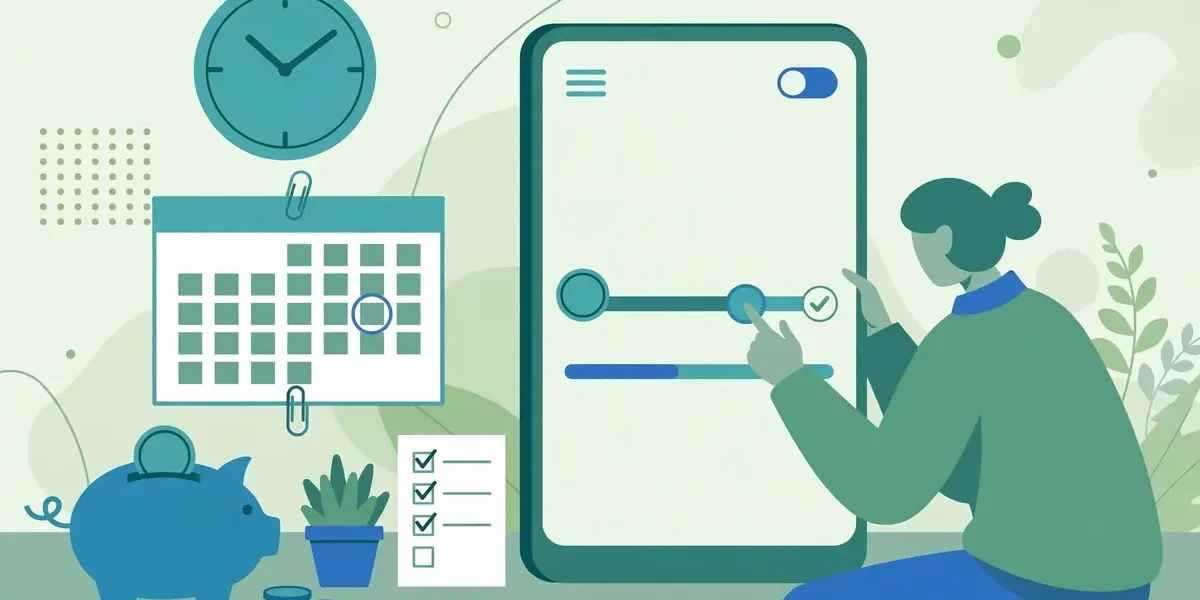
Money limits are only half the job: time is the other half. First, a session time limit ends your session after a fixed amount of time, such as 60 minutes a day. Secondly, a reality check is a pop-up at intervals you pick. Every 30 minutes is sensible. It shows how long you have played and your running win or loss. It pauses the session without ending it, giving you a moment to decide whether to continue.
Time matters because long sessions blur judgement. In fact, after an hour of betting, wins feel smaller and losses feel personal. That is when stakes creep up. For example, set a 60-minute session limit and a 30-minute reality check. You get two check-ins per session. The second one often tells you it is time to stop. That is how to set betting limits on your time, not just your money. Next, keep betting out of work hours and sleep hours. Moreover, use the time between sessions for something else entirely. In other words, a time limit protects your day, not just your wallet.
Self-Exclusion and Time-Outs: The Stronger Tools
Sometimes a limit is not enough, and you need the door closed for a while. First, a time-out locks your account for a short break, commonly 24 hours, 7 days or 30 days. It is the right tool after a heavy loss or a bad day. Secondly, self-exclusion is a longer and stricter block, usually at least six months, designed to be hard to reverse early. It is the right tool when you want to stop playing at that operator for a long time.
The key difference is commitment. Knowing how to set betting limits also means knowing when a limit is not enough. In short, a time-out is a pause; self-exclusion is a decision. Next, remember that self-exclusion works one operator at a time. There is no single register in Nigeria that covers every operator at once, so you must self-exclude at each site you use. In addition, add blocking software to your devices: BetBlocker is free, and Gamban is a paid option. Finally, tell someone you trust that you have self-excluded.

Warning Signs: When Limits Are Not Enough
Notice the signs early. First, chasing losses: raising stakes to win back money already lost. Secondly, borrowing money to gamble, or gambling with money meant for bills. Thirdly, hiding your betting from family, or lying about how much you lost. Next, betting to escape stress, boredom or sadness rather than for fun. Finally, feeling restless or irritable when you try to cut down.
One sign may mean little, but two or three together mean it is time to act. In fact, gambling disorder is a recognised medical condition, not a lack of willpower, and it is treatable. For that reason, the right response is not shame but a stronger step: a time-out, self-exclusion, and a call to someone who can help. If a “tipster” is pressuring you to bet more, read our guide to spotting fake fixed-match scams.
Getting Help in Nigeria
Nigeria has real, free help for gambling problems, and you do not need to call yourself an addict to use it. First, Gamble Alert runs Nigeria’s dedicated gambling-support helpline on 0916 295 7989, free and confidential. Its toll-free lines are 0705 889 0073 and 0705 889 0074, plus live chat on its website. Its counsellors deal with betting and gambling specifically and can point you toward therapy and group support. Secondly, MANI, the Mentally Aware Nigeria Initiative, offers free, confidential mental-health support around the clock. Its numbers are 0809 111 6264 and 0811 168 0686.
If you are in immediate danger, or thinking of harming yourself, call 112 at once and go to the nearest hospital. A gambling helpline is built for support and recovery guidance, not for emergencies. In addition, clinical treatment is available at Federal Neuro-Psychiatric Hospitals, including Yaba in Lagos. Finally, if you are worried about someone else, you can call Gamble Alert yourself: family members do not need the gambler’s permission. Our guide on how to judge a prediction site also helps you separate honest information from tipsters who profit when you bet more.
Bottom Line
To sum up, learning how to set betting limits comes down to this: a deposit limit first, then a loss limit and a time limit, plus reality checks every session. Know when to reach for a time-out or self-exclusion. Write the numbers down and tell someone you trust. Finally, if gambling stops being fun, call Gamble Alert on 0916 295 7989. That call is free and confidential.
Play responsibly. Betting is for adults aged 18 and over only. Treat it as entertainment, not income, and only stake money you can afford to lose.
Betting is regulated at state level in Nigeria. The Supreme Court nullified the National Lottery Act 2005 on 22 November 2024. The National Lottery Regulatory Commission framework now applies only in the Federal Capital Territory. If you need help, Gamble Alert is on 0916 295 7989 and MANI is on 0809 111 6264.
Frequently Asked Questions
What is the first betting limit I should set?
A deposit limit, set before your first deposit. It caps what you can pay in per day, week or month, and it is the single most effective tool. That is how to set betting limits in the right order: deposit first, then loss and time.
How much should my deposit limit be?
Only money you can lose in full without touching rent, food, bills or savings. Lower-risk guidance suggests no more than 2% of weekly take-home pay: on ₦50,000 a week, that is ₦1,000 a week.
What is the difference between a time-out and self-exclusion?
A time-out is a short break, commonly 24 hours to 30 days, and it ends on its own. Self-exclusion is a longer block, usually at least six months, designed to be hard to reverse. Use a time-out after a bad day, and self-exclusion when you want to stop for a long time.
Can I raise my betting limit straight away?
Usually not. Most sites apply a lower limit at once but delay any increase, often for 24 hours or longer. That stops you raising it in the heat of the moment.
Is there a gambling helpline in Nigeria?
Yes. Gamble Alert runs Nigeria’s dedicated gambling-support helpline on 0916 295 7989, free and confidential, with toll-free lines 0705 889 0073 and 0705 889 0074. MANI offers free 24/7 support on 0809 111 6264. For emergencies, dial 112.
Does Nigeria have a national self-exclusion register?
No. Unlike the UK, where one GAMSTOP registration blocks every licensed site, Nigeria has no single register covering every operator. Self-exclude at each site you use, and add blocking software to cover the rest.

 By George Michael