- Quick Answer
- What Is a Draw No Bet in Simple Terms
- How Draw No Bet Works: The Three Outcomes
- Worked Examples With Naira
- Draw No Bet Compared With 1X2
- Draw No Bet Compared With Double Chance
- When Draw No Bet Makes Sense, and When It Does Not
- Common Mistakes With Draw No Bet
- Bottom Line
- Frequently Asked Questions
- What is a draw no bet in football?
- Does draw no bet include extra time?
- What happens to a draw no bet in an accumulator?
- Is draw no bet the same as double chance?
- Is draw no bet a safe bet?
What is a draw no bet? It is a football market where you pick one team to win, and a draw returns your stake instead of costing you the bet. For example, you back the home team, the match ends 1-1, and the bookmaker gives your money back. As a result, you lose only when your team loses outright. Our football betting markets guide covers this market briefly, and this article goes far deeper.
Quick Answer
- Firstly, draw no bet (DNB) means you pick one team to win.
- Secondly, your team wins and the bet pays out at the quoted odds.
- Thirdly, a draw returns your stake in full, with no profit and no loss.
- Next, your team loses and the bet loses the whole stake.
- Finally, settlement uses the 90-minute result, so extra time and penalties do not count.
What Is a Draw No Bet in Simple Terms
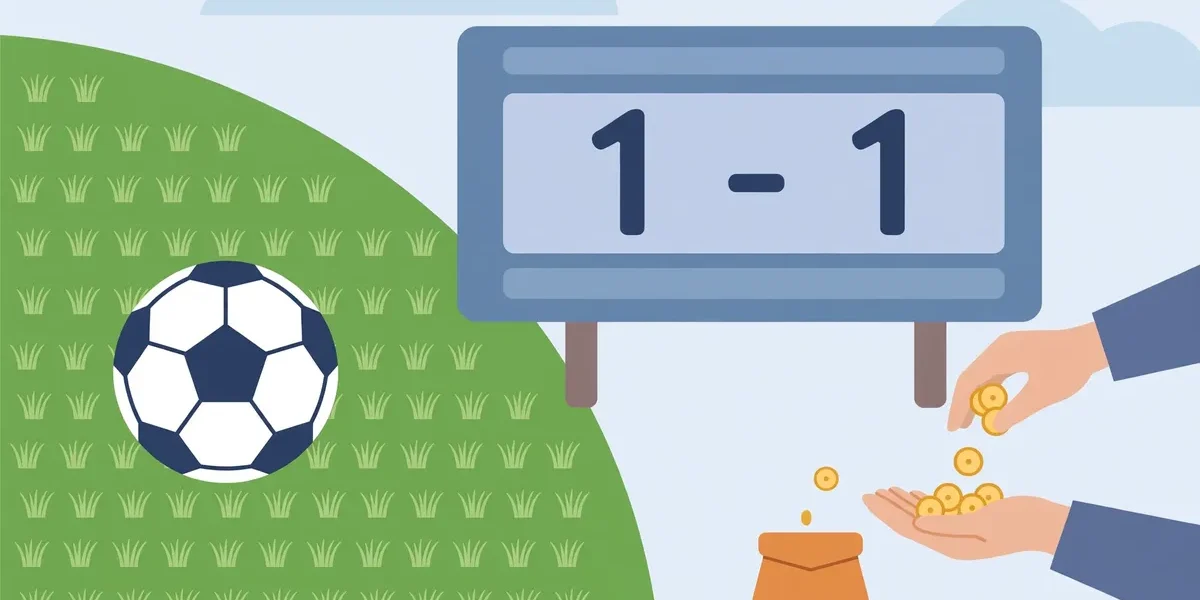
A draw no bet wager asks one simple question: which team will win the match? In short, you choose the home team or the away team, and the draw becomes a “no bet” result. For example, you stake ₦1,000 on the home team at odds of 1.80. If the home team wins, you collect ₦1,800 in total, which is ₦800 profit. If the match ends level, your ₦1,000 comes back. If the away team wins, you lose the ₦1,000. Moreover, the name tells you the whole rule: the draw is “no bet”.
In contrast, a normal 1X2 bet treats the draw as a third result that can beat you. For instance, you back the home team in 1X2 and the match ends 1-1, and that bet loses. With draw no bet, that same 1-1 result hands your stake back. However, that safety has a price: DNB odds run shorter than the same team’s 1X2 win odds. In other words, you trade payout for protection.
How Draw No Bet Works: The Three Outcomes
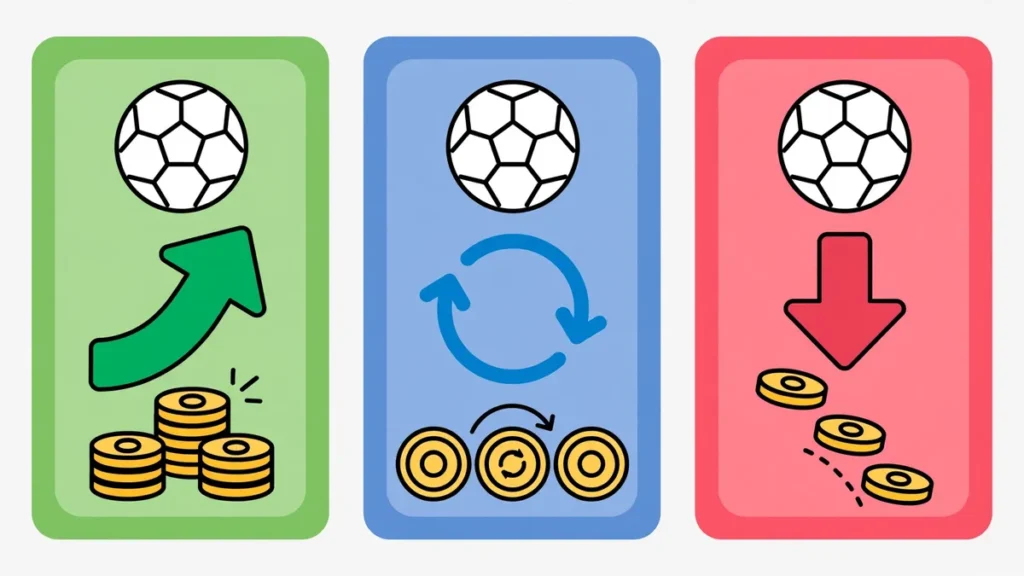
In short, what is a draw no bet really doing? It turns a three-outcome market into a two-team choice with a safety net. Firstly, your team wins and the bookmaker pays you at the quoted odds. Secondly, the match ends in a draw and the bookmaker returns your stake. Thirdly, your team loses and the bookmaker keeps your stake. Next, note that a refund is not a win: you earn nothing on a draw, and you lose nothing either. In fact, bookmakers often call the refund a “push” or a “void”, and both words mean the bet did not happen.
Settlement follows the 90-minute result plus stoppage time. For example, a cup match ends 1-1 after 90 minutes and your team wins on penalties, and your DNB bet still refunds, because extra time and penalties do not count. Above all, never assume a market includes extra time: the standard football rule is 90 minutes only.
| Result | Your DNB bet | What you get back |
|---|---|---|
| Your team wins | Win | Stake x odds |
| Match ends in a draw | Refund (push) | Your stake back |
| Your team loses | Lose | Nothing |
Worked Examples With Naira
What is a draw no bet worth in naira terms? Worked numbers make the rule concrete, so here are three plain examples. Firstly, you stake ₦1,000 on the home team DNB at 1.80 and the home team wins 2-0. The return is ₦1,000 x 1.80 = ₦1,800, so your profit is ₦800. Secondly, you stake the same ₦1,000 at 1.80 and the match ends 1-1. The bookmaker returns ₦1,000, so your profit is ₦0 and your loss is ₦0. Thirdly, an away win at 1-0 loses the whole ₦1,000.
Next, try a bigger stake at shorter odds. For example, you stake ₦5,000 on a strong favourite DNB at 1.40 and the favourite wins 1-0. The return is ₦5,000 x 1.40 = ₦7,000, so your profit is ₦2,000. In contrast, the same ₦5,000 on that favourite in 1X2 might pay 1.55, which would return ₦7,750. As a result, the DNB safety net costs ₦750 of profit on this bet.
| Example | Stake and odds | Result | Return | Profit or loss |
|---|---|---|---|---|
| Home favourite | ₦1,000 at 1.80 | Home wins 2-0 | ₦1,800 | +₦800 |
| Home favourite | ₦1,000 at 1.80 | Draw 1-1 | ₦1,000 | ₦0 |
| Home favourite | ₦1,000 at 1.80 | Away wins 1-0 | ₦0 | -₦1,000 |
| Underdog away | ₦2,000 at 2.10 | Away wins 2-1 | ₦4,200 | +₦2,200 |
| Underdog away | ₦2,000 at 2.10 | Draw 1-1 | ₦2,000 | ₦0 |
Draw No Bet Compared With 1X2
The 1X2 market is the standard match-result market: 1 means a home win, X means a draw, and 2 means an away win. Firstly, 1X2 gives you three choices, while DNB gives you two teams plus a refund. Secondly, 1X2 pays more on the same team, because it carries the extra risk of the draw. Thirdly, 1X2 lets you back the draw itself at long odds, while DNB never pays on a draw. In short, what is a draw no bet compared with 1X2? It is the same pick with the draw removed as a losing result, and the odds shortened to pay for that removal.
For example, a home team might pay 2.00 in 1X2 and 1.55 in DNB. On a ₦2,000 stake, the 1X2 win returns ₦4,000 and the DNB win returns ₦3,100. As a result, you give up ₦900 of profit for the refund. In contrast, if the match draws, the 1X2 bet loses ₦2,000 and the DNB bet returns ₦2,000. Next, ask yourself which risk worries you more: the smaller payout, or the lost stake on a draw?
| Market | If your team wins | If the match draws | If your team loses |
|---|---|---|---|
| 1X2 (back the team) | Win at full odds | Lose the stake | Lose the stake |
| Draw no bet | Win at shorter odds | Stake refunded | Lose the stake |
Draw No Bet Compared With Double Chance
Double chance is the market most bettors confuse with DNB, so learn the difference now. Firstly, double chance covers two of the three 1X2 results in one bet: 1X covers a home win or a draw, X2 covers a draw or an away win, and 12 covers either team to win. Secondly, a draw WINS a 1X or X2 double chance bet, and the bookmaker pays you at the quoted odds. Thirdly, a draw only REFUNDS a DNB bet, and the bookmaker pays you nothing. In short, what is a draw no bet compared with double chance? DNB treats the draw as “no bet”, while double chance treats the draw as a winning result when your selection includes it.
For example, you stake ₦1,000 on 1X double chance at 1.30 and the match ends 1-1. The return is ₦1,300, so your profit is ₦300. In contrast, the same ₦1,000 on home DNB at 1.80 and a 1-1 finish returns ₦1,000, with no profit. As a result, double chance pays less but pays on the draw, while DNB pays more but only refunds on the draw. Moreover, our double chance predictions page covers that market in full.
When Draw No Bet Makes Sense, and When It Does Not
DNB fits some matches far better than others. Firstly, it fits a tight match where you fancy one team but the draw looks likely. For example, two even teams meet, you rate the home side slightly higher, and DNB lets you back them without fearing a 1-1 finish. Secondly, it fits an away underdog you rate highly: the odds stay attractive, and the refund softens the most common way that bet fails.
In contrast, DNB makes little sense on a heavy favourite at very short odds. For instance, a favourite at 1.15 DNB returns only ₦150 profit on a ₦1,000 stake, and the refund adds little value when a draw looks unlikely. Next, DNB makes little sense when you actually expect a draw: in that case, back the draw in 1X2 or take double chance instead. Finally, always compare the DNB price with the 1X2 price before you stake, because the gap tells you what the protection costs.
Common Mistakes With Draw No Bet
New bettors make the same errors with DNB, so avoid these five. Firstly, many treat a refund as a win. In fact, a refund is neither a win nor a loss: your money comes back, and your bankroll stays exactly where it was. Secondly, many forget that extra time does not count. For example, your team wins a cup tie on penalties after a 1-1 draw in 90 minutes, and your DNB bet still refunds. Thirdly, many pick DNB on every bet and pay the shorter odds every time. As a result, their winners pay less, and their profits shrink over a season.
Fourthly, many stake too much because DNB “feels safe”. In contrast, DNB only removes the draw: your team can still lose, and a losing run still drains a bankroll. For that reason, keep stakes small and steady, and read our guide on how to manage your betting bankroll before you raise them. Finally, many never check the market rules on their own bookmaker, so read the settlement rules on your slip before you confirm the bet.
Bottom Line
To sum up, what is a draw no bet? It is a bet on one team to win, with your stake back when the match ends level. In short, you win when your team wins, you get a refund on a draw, and you lose if your team loses. Finally, compare its price with 1X2 and double chance every time, because the protection always costs you something in the odds.
Play responsibly. Betting is for adults aged 18 and over only. Treat it as entertainment, not income, and only stake money you can afford to lose.
Betting is regulated at state level in Nigeria: the Supreme Court nullified the National Lottery Act 2005 on 22 November 2024, so that Act is no longer the law, and the National Lottery Regulatory Commission framework applies only in the Federal Capital Territory. In other words, never take a site’s claim to be “licensed by the NLRC” as a general guarantee. Before you trust any site, read our guide on how to judge a prediction site.
Frequently Asked Questions
What is a draw no bet in football?
It is a bet on one team to win, where a draw returns your stake. For example, you back the home team, the match ends 1-1, and you get your money back.
Does draw no bet include extra time?
No. In fact, standard DNB settles on the 90-minute result plus stoppage time. As a result, extra time and penalties do not count unless the market says so.
What happens to a draw no bet in an accumulator?
A refunded leg usually drops out, and the remaining legs carry on at their combined odds. However, rules differ between bookmakers, so check your own site’s rules first.
Is draw no bet the same as double chance?
No. In short, a draw wins a double chance bet when your selection covers it, while a draw only refunds a DNB bet. For that reason, double chance pays less but pays on the draw.
Is draw no bet a safe bet?
No bet is safe. In fact, DNB removes only the draw as a losing result, and your team can still lose outright. As a result, keep stakes small and treat every bet as a risk.
 By George Michael