
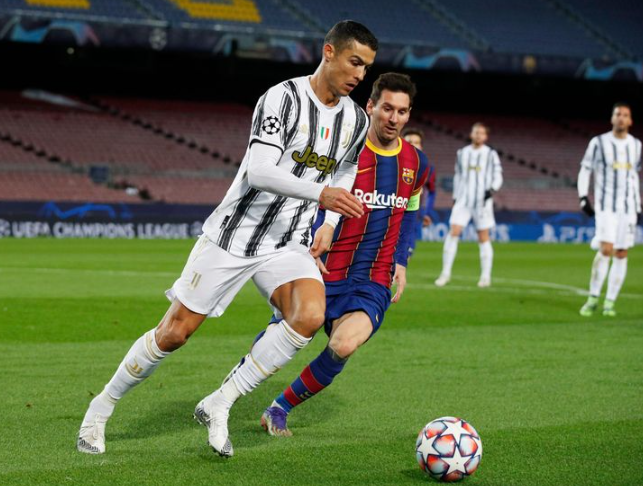
SINGAPORE, June 26, The choice between Lionel Messi and Cristiano Ronaldo may reveal more than just a fan’s favourite footballer, it could also signal their political leanings and psychological traits, according to new research.
A study led by Saifuddin Ahmed at Nanyang Technological University in Singapore analysed the relationship between football star preferences and individual values, surveying 10,661 adults across 26 countries. The preprint paper, recently posted on the SSRN repository, has yet to undergo peer review, with the team planning follow up research to examine the specific causes behind these associations .
Researchers asked participants whether they preferred Messi or Ronaldo and assessed their political leanings as liberal or conservative. The team also evaluated age, self esteem, and news consumption habits .
Across all 26 countries, liberal respondents tended to favour Messi, while conservative respondents leaned towards Ronaldo. This association was strongest among younger generations and weakened with age .
At the country level, respondents favoured Ronaldo in 11 nations and Messi in eight, including Korea, while the remaining seven showed no clear preference .
Media habits and psychological profiles
The researchers identified distinct differences in media usage and psychological profiles. Participants who consumed news on TikTok and Instagram tended to favour Ronaldo, while respondents with higher self esteem were more likely to prefer the Portuguese forward .
Ahmed said the divergent public images of the two athletes play a significant role in this ideological split.
“Messi is commonly associated with a quieter, team oriented image, while Ronaldo is perceived as an individual who is openly ambitious and displays personal achievement,” Ahmed said. “People can be attracted to public figures who align better with their own values” .
The researchers emphasised that the findings indicate football star preferences go beyond simple taste and can be directly connected to an individual’s political and psychological characteristics .