
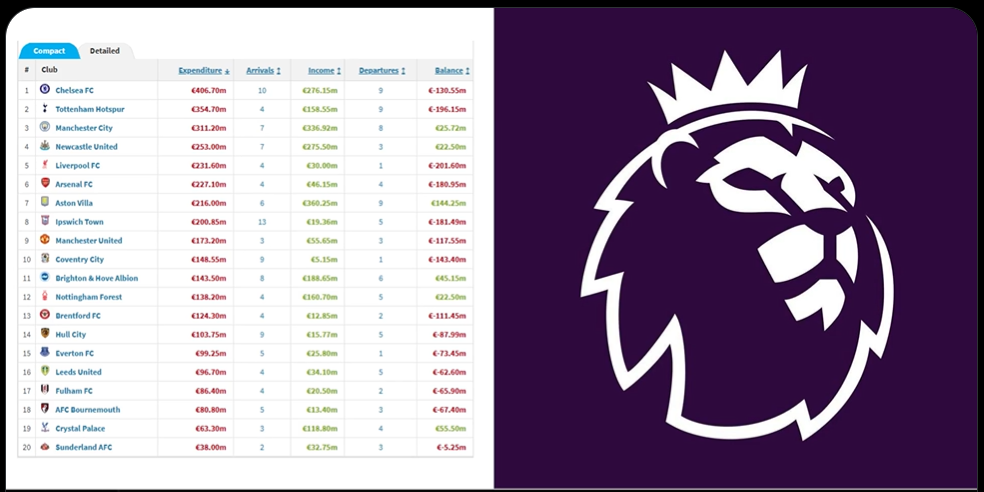
Premier League clubs have set a new summer transfer spending record after their combined gross outlay climbed to £3.198 billion, underlining the financial strength of England’s top flight and extending a remarkable period of investment across the division.
The figure surpassed last summer’s previous record, when the league’s 20 clubs broke the £3 billion barrier for the first time. The latest total was pushed higher by Manchester City’s reported £65 million signing of Everton forward Iliman Ndiaye as clubs continued to complete major deals before the transfer window closed.
Premier League spending rises sharply again
The scale of spending marks a dramatic increase from five years ago, when Premier League clubs spent a combined £1.13 billion during the summer window.
Several of the biggest deals involved transfers between English clubs. Manchester City paid £116 million for Nottingham Forest midfielder Elliot Anderson, while Chelsea signed Morgan Rogers from Aston Villa for £117 million. Tottenham Hotspur also broke their transfer record to bring Sandro Tonali from Newcastle United in a deal that could reach £100 million.
Liverpool were also among the clubs involved in the window’s biggest moves after agreeing an initial £107 million deal for Paris St Germain forward Bradley Barcola, with the overall package potentially rising to £123 million.
The concentration of major transfers within the Premier League reflected the growing value of players already established in English football, with approximately 38% of deals completed between clubs in the division, compared with around 30% during the previous summer window.
English clubs widen financial gap over European rivals
The latest spending figures again highlighted the Premier League’s purchasing power compared with Europe’s other leading competitions.
Only a small number of major transfers involving clubs outside England reached similar levels, while several Premier League sides continued to spend heavily on strengthening their squads.
Promoted clubs also contributed significantly to the overall total. Ipswich Town, Coventry City and Hull City spent more than £400 million combined as they prepared for life in the Premier League.
The spending of the newly promoted sides was another indication of the financial demands placed on clubs entering the division, where survival can depend heavily on improving squads capable of competing with more established teams.
Chelsea lead the spending as major clubs rebuild
Chelsea emerged as the biggest spenders of the summer, committing around £347 million on new players as Xabi Alonso began shaping his squad.
Manchester City and Tottenham were also among the leading spenders, with Spurs investing approximately £303 million as they attempted to rebuild after two difficult seasons near the bottom of the table.
Aston Villa and Newcastle United remained active late in the window. Villa completed the £47 million signing of Senegal winger Ibrahim Mbaye from Paris St Germain, while Newcastle paid £51.4 million for Lille forward Matias Fernandez-Pardo.
The volume of business completed across the division has reinforced the Premier League’s position as football’s dominant transfer market, with English clubs once again able to invest at levels that few European rivals can match.
The new record also suggests that the pace of spending is unlikely to slow soon. With leading clubs continuing to compete for established Premier League players and elite talent from across Europe, transfer fees have continued to rise and domestic rivals have become increasingly willing to pay premium prices for proven performers.
The summer window has therefore delivered another clear sign of the Premier League’s financial influence, with a record £3.198 billion spent as clubs across the division invested heavily in strengthening their squads.
For more football developments and transfer coverage, follow the latest updates from Winonbetonline.
For official information on the English top flight, visit the Premier League.