
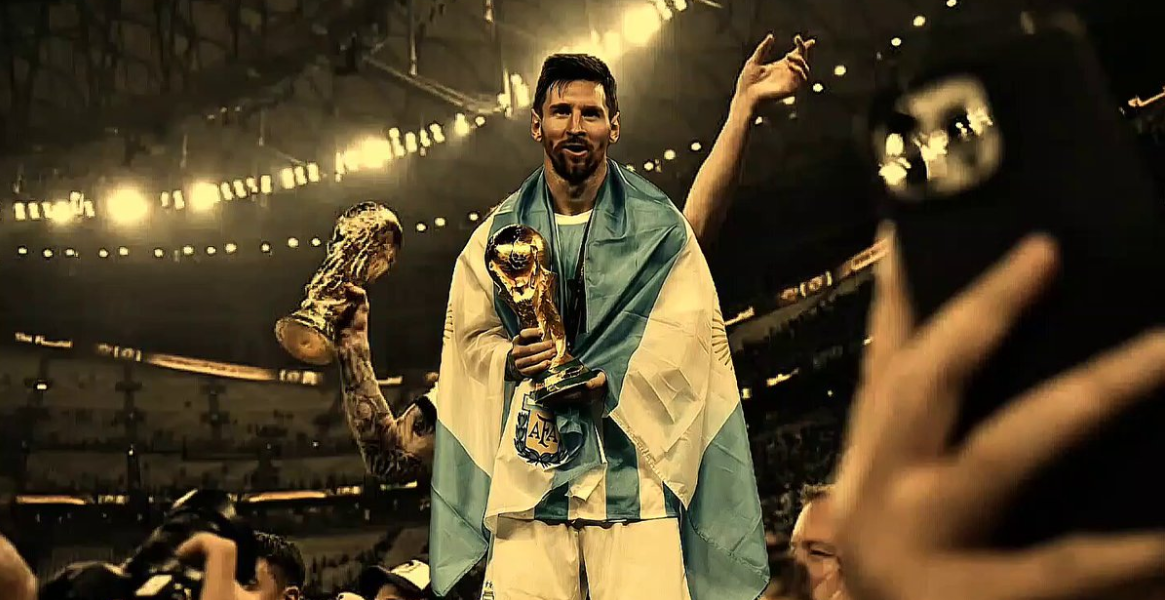
Lionel Messi has brought his international career with Argentina to an end, closing a journey that took him from early disappointment and criticism to World Cup glory and a defining place in the country’s football history.
The 39-year-old steps away after helping Argentina reach the final of the 2026 World Cup, where defeat against Spain denied him the chance to finish his career with a second successive world title.
While there was no perfect farewell, Messi leaves Argentina with an international record and legacy few players in the history of the game can match. He won the 2022 World Cup and lifted the Copa America twice, becoming the central figure in one of the most successful periods the national team has experienced.
Messi’s long road to international glory
Argentina’s triumph in Qatar in 2022 changed the way Messi’s international career would be remembered forever.
Before then, his achievements with the national team had often been judged against the standards set by Diego Maradona and against the trophies he had collected during an extraordinary club career.
Messi had come close to international glory several times. Argentina lost the 2014 World Cup final to Germany after extra time, before suffering successive Copa America final defeats in 2015 and 2016.
The second loss to Chile in 2016 proved particularly painful. Messi briefly announced his retirement from international football following the defeat, raising doubts over whether he would ever return.
He did return, however, and the next phase of his Argentina career transformed both his relationship with supporters and his place in the country’s football history.
Copa America success changed everything
The breakthrough arrived at the 2021 Copa America, when Argentina defeated Brazil at the Maracana to give Messi his first major senior international trophy.
It was a moment that removed a burden which had followed him for much of his career. Argentina had finally won a major title with Messi as their captain, and the success helped establish a winning belief within the squad under coach Lionel Scaloni.
The team would go on to reach an even greater level in Qatar.
Argentina recovered from their shock defeat to Saudi Arabia in their opening match and fought their way to the World Cup final, where Messi delivered another defining performance against France.
He scored twice in the final and converted in the penalty shootout as Argentina secured the trophy after one of the most dramatic World Cup finals in history.
The victory completed Messi’s long pursuit of football’s biggest international prize and placed him firmly among the players who have shaped the history of the World Cup.
A different role in Argentina’s new era
Messi continued with the national team after Qatar and helped Argentina retain the Copa America in 2024 before making one final attempt at the World Cup.
By 2026, his role had naturally evolved. The acceleration that once allowed him to leave defenders behind had diminished with age, but his ability to read the game and influence decisive moments remained.
Argentina had also changed around him. Under Scaloni, the team developed into an experienced side with established leaders and players capable of carrying responsibility without relying entirely on their captain.
That evolution allowed Messi to continue contributing without Argentina becoming dependent on him for every moment of inspiration.
He remained capable of finding space, controlling the tempo and creating opportunities with the quality of his passing and decision-making.
From criticism to Argentina icon
Messi’s relationship with Argentina was not always as secure as it became in the later stages of his career.
Having moved from Rosario to Barcelona as a teenager, he spent years facing questions over whether his connection to the national team could ever match the bond supporters had with Maradona.
International defeats intensified those debates, particularly after Argentina’s losses in major finals.
But the Copa America triumph in 2021 and the World Cup victory a year later changed the conversation.
Messi was no longer measured primarily by what he had failed to win with Argentina. His achievements became part of the country’s football identity, while the comparisons with Maradona lost much of their significance.
He had built his own place in Argentina’s history.
A legacy beyond trophies and records
Messi’s retirement marks the end of an international career that lasted more than two decades and produced some of the most important moments in modern Argentine football.
His individual records and trophy collection will remain central to his legacy, but they tell only part of the story.
His Argentina career was shaped by repeated setbacks before the breakthrough finally arrived. He experienced World Cup and Copa America heartbreak, briefly walked away from the national team, returned and eventually led his country through its most successful modern period.
Argentina’s defeat in the 2026 World Cup final means Messi does not leave with a second World Cup title, but the result does little to change what he achieved for his country.
He departs as a World Cup winner, a two-time Copa America champion and one of the defining figures in Argentina’s football history.
For a player who spent years trying to escape comparisons with the country’s greatest icon, Messi leaves with something more enduring: a legacy entirely his own.