England face a tricky opening round at the 2026 World Cup after being slung into Group L with Croatia, Ghana and Panama, as FIFA finally pulled the balls in Washington on Friday night. Holders Argentina got a kinder deal on paper, but most of the heavyweights was scattered across a draw that looked messy and chaotic at times.
Brazil drop into Group C with Morocco, Haiti and Scotland, a proper banana skin set up, while hosts Mexico kick the whole thing off in Group A with South Korea, South Africa and whoever survives the European play off scrap. Canada meet Switzerland, Qatar and the winner of Italy’s route in Group B, meaning there’s a fair chance the Azzurri end up straight back at the big show after missing the last two tournaments, though nothing feels guaranteed with that lot.
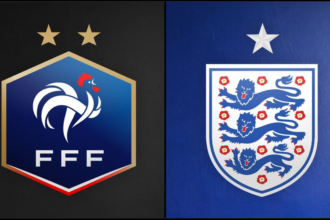
France, fresh from losing the final in 2022, was paired with Senegal and Erling Haaland’s Norway in Group I, plus one of Bolivia, Suriname or Iraq. The prospect of Haaland slugging it out with Kylian Mbappé so early in the tournament is exactly the sort of thing FIFA claims it tries to avoid, but the draw never cared much for tidy scripts. “It’s a proper group, not too comfortable, not too stupid,” one French official muttered afterwards, sounding like he’d seen worse.
Spain’s lot looks deceptively soft: Cape Verde, Saudi Arabia and Uruguay in Group H, though La Roja was stung by Saudi Arabia before and won’t be laughing too loud. Germany meet Ecuador, Ivory Coast and Curaçao in Group E, while the Netherlands are shoved in with Japan, Tunisia and whichever side crawls through the Turkey Romania Slovakia Kosovo gauntlet. Belgium, meanwhile, has Egypt, Iran and New Zealand. A tidy draw if they don’t bottle it again.
USA were given Australia and Paraguay in Group D, but all the noise around the event ended up being about politics, as ever. Donald Trump, hosting the showpiece at the Kennedy Centre, hogged the spotlight and will bizarrely take home a FIFA Peace Prize, which was met with raised eyebrows from pretty much everyone not on FIFA’s salary. Iran threatened to boycott the ceremony over visa issues, but eventually sent a delegation to avoid embarrassing the governing body live on telly.
Argentina, who will try to defend their crown with Lionel Messi turning 39 during the tournament, line up with Algeria, Austria and Jordan in Group J. “I hope I can be there,” Messi said this week, teasing a last dance nobody dare predict. Spain, Argentina, France and England are kept apart until the semi finals by design, with FIFA still insisting on ranking based separation, though it was never going to stop media dreaming of early carnage.
This is the first ever 48 team World Cup, split into 12 groups of four, with qualification so forgiving that even teams finishing third could sneak into the last 32. Arsène Wenger, now running FIFA’s development brief, has defended the expansion as “natural evolution”, though a lot of supporters think it’s a cash grab wearing a tracksuit. Still, Cape Verde, Jordan and Curaçao making it to the party wasn’t something anyone saw a decade ago.
The opener goes off at the Azteca in Mexico City, with the final staged just outside New York, making it the most spread out tournament in modern times. Fixtures, venues and kick off times land on Saturday, as teams scramble to plan travel for a competition that looks like a logistical migraine. England fans will already be rolling eyes at those miles, never mind the prospect of Croatia turning up angry and Ghana always ready to turn it into a street fight.
But for now, the groups are locked in, the countdown begins, and the big nations can start working out how to avoid an early exit. Some will like their path. Some will lie about it. And one or two will already be cursing the balls. Football’s coming to North America and it looks like chaos already.